

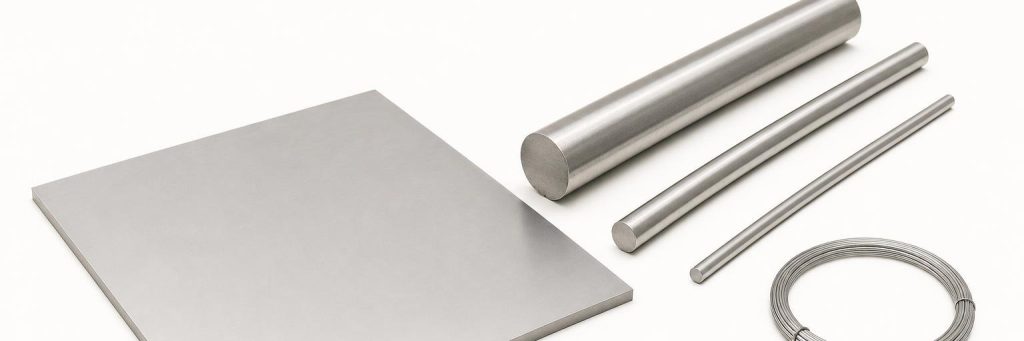
Tungsten vs. Molybdenum: Key Differences and Industrial Applications
Tungsten and molybdenum are among the most critical refractory metals for high-temperature
industrial applications. The bottom line: tungsten has the highest melting point of any metal
at 6,188°F, is nearly twice as dense as molybdenum, and remains mechanically stable at
temperatures above 3,272°F. Molybdenum melts at 4,748°F, is significantly easier to
machine, and is considerably less expensive — the more cost-effective choice wherever
tungsten’s extreme properties are not required.
What properties distinguish tungsten from molybdenum?
Both metals share fundamental strengths: exceptional high-temperature stability,
low vapor pressure, and excellent resistance to a wide range of chemical media. The key
processing difference: tungsten’s melting point rules out conventional casting — it is
produced exclusively by powder metallurgy and requires specialist downstream processing.
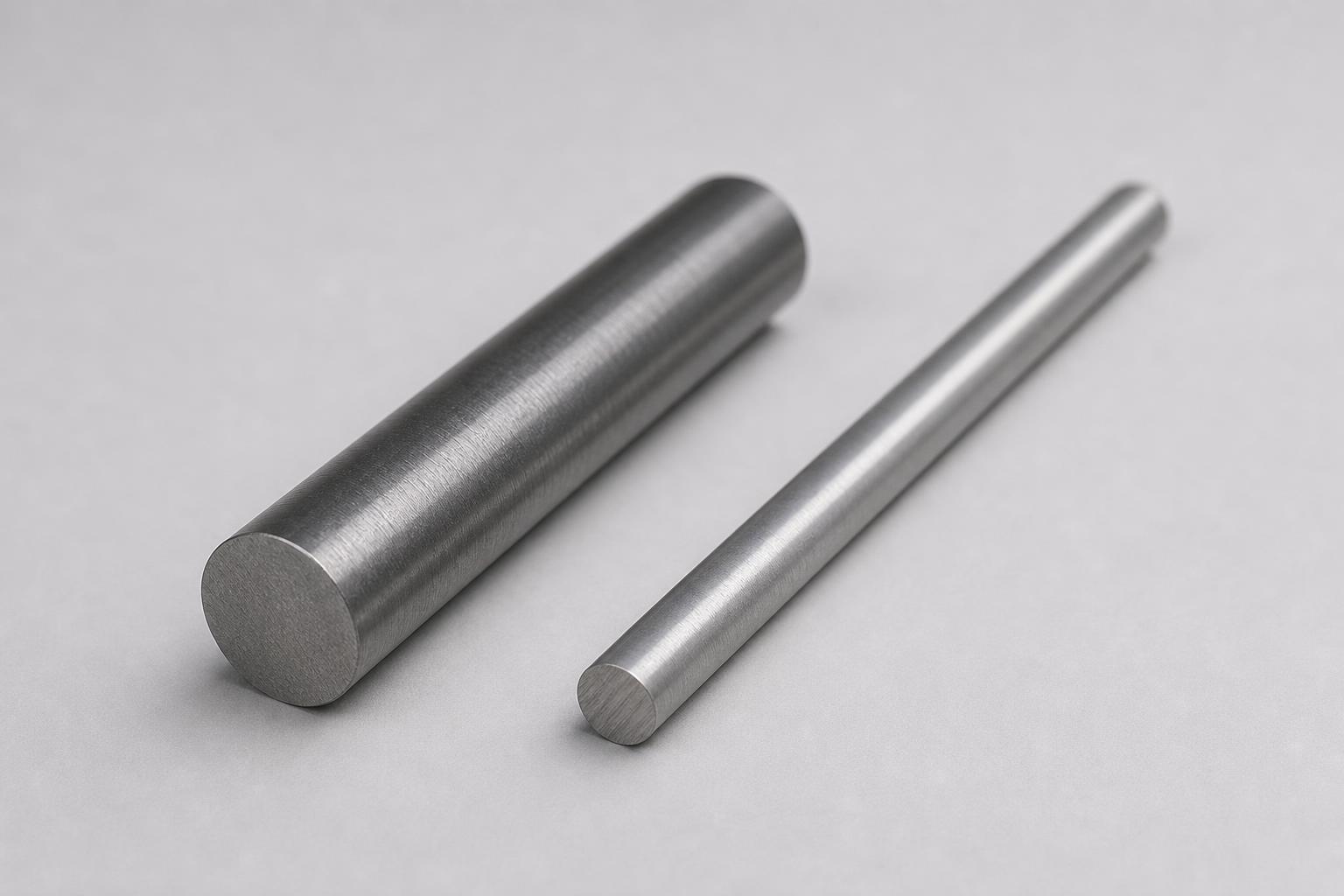
Molybdenum, by contrast, can be machined, rolled, and formed; semi-finished products such
as sheet, rod, and wire are available off-the-shelf in a wide dimensional range.
| Property | Tungsten (W) | Molybdenum (Mo) |
|---|---|---|
| Melting point | 6,188°F | 4,748°F |
| Density | 19.3 g/cm³ (0.697 lb/in³) | 10.2 g/cm³ (0.369 lb/in³) |
| Thermal conductivity | approx. 173 BTU·in/(hr·ft²·°F) | approx. 145 BTU·in/(hr·ft²°F) |
| Manufacturing | powder metallurgy only | powder metallurgy, machinable, rollable |
| Oxidation resistance | very high (inert atmosphere required) | limited (above 932°F) |
| Relative cost | high | significantly lower |
When is tungsten the right material?
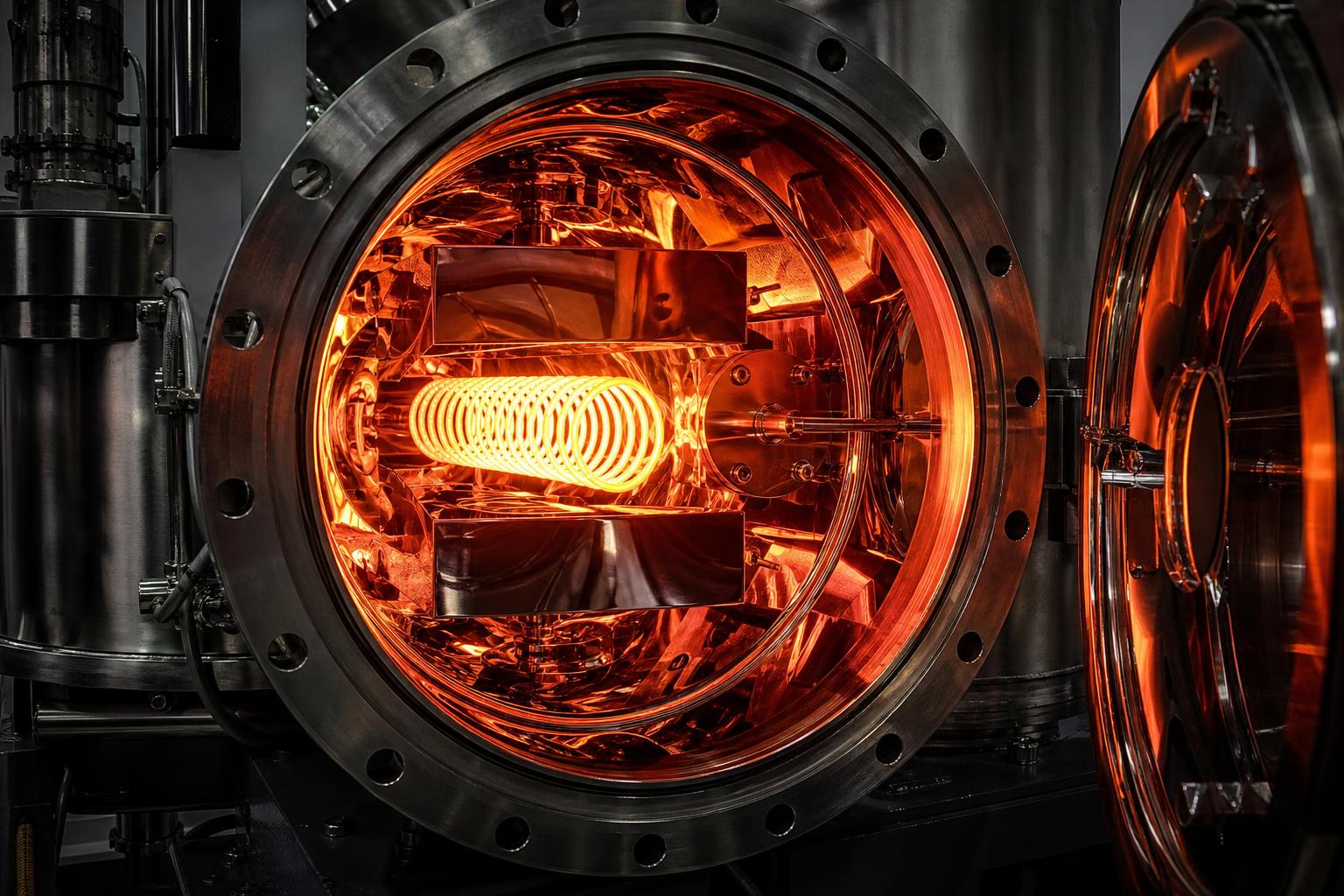
- Heating elements in high-temperature furnaces: Tungsten is the only metal
that remains mechanically stable above 3,002°F — the standard choice for high-vacuum furnaces
in the most demanding temperature class. - X-ray anodes: High density and high melting point make tungsten the standard
material for X-ray tubes used in medical imaging and nondestructive testing (NDT). - Radiation shielding: At 0.697 lb/in³,
tungsten
is increasingly replacing lead — higher shielding performance at the same wall thickness,
without toxicity or regulatory concerns. - Welding electrodes (TIG/GTAW): Tungsten electrodes are the industry
standard in gas tungsten arc welding (GTAW) due to their extreme temperature resistance. - Aerospace and defense: Components in rocket propulsion systems and
high-temperature turbines where no other metal meets the performance requirements.
“Tungsten is the only metal that remains mechanically stable at temperatures
above 3,002°F — and therefore without substitute for the most extreme temperature
class.”
When is molybdenum the more cost-effective option?
- Vacuum furnace engineering: Molybdenum heating elements, radiation shields,
and support trays cover the service range up to approximately 2,912°F — at significantly lower
material costs than tungsten. Learn more:
Materials for vacuum technology. - Glass industry: Electrodes in glass melting tanks —
molybdenum has been the
established choice for decades due to its resistance to glass melts. - Chemical processing: Plant components handling aggressive media,
hydrogen, and inert gas atmospheres benefit from molybdenum’s excellent chemical resistance. - Semiconductor manufacturing: As a sputtering target for thin-film
deposition — TFT displays, solar cells, and integrated circuits. - Steel alloying: Around 80 % of global molybdenum production goes into steel manufacturing (source: International Molybdenum Association, IMOA), improving high-temperature strength, toughness, and corrosion resistance.
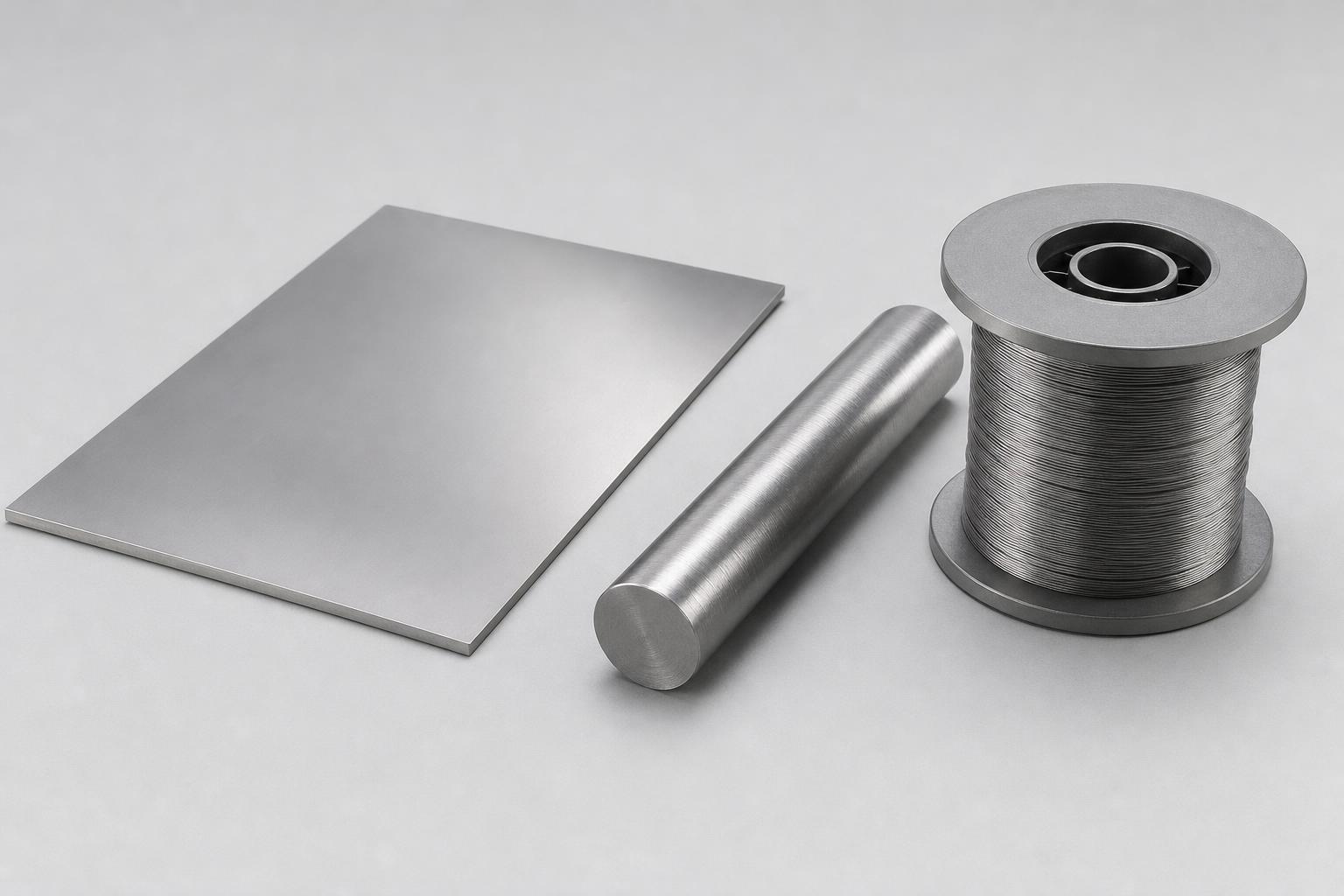
Molybdenum’s cost advantage: equal high-temperature performance up to
2,912°F at a quarter to half the price of tungsten — with significantly easier
machinability and broader availability.
How does tungsten cost compare to molybdenum?
Molybdenum is significantly less expensive than tungsten. Depending on purity and
product form, tungsten typically costs two to four times as much as molybdenum. For
engineering designs where temperatures up to 2,912°F are sufficient, molybdenum is
the more cost-effective choice — without compromising performance.
An additional cost factor: tungsten’s exclusively powder-metallurgical production makes
downstream processing considerably more demanding than molybdenum, which can be machined
and formed using conventional methods.
Which industries use tungsten and molybdenum?
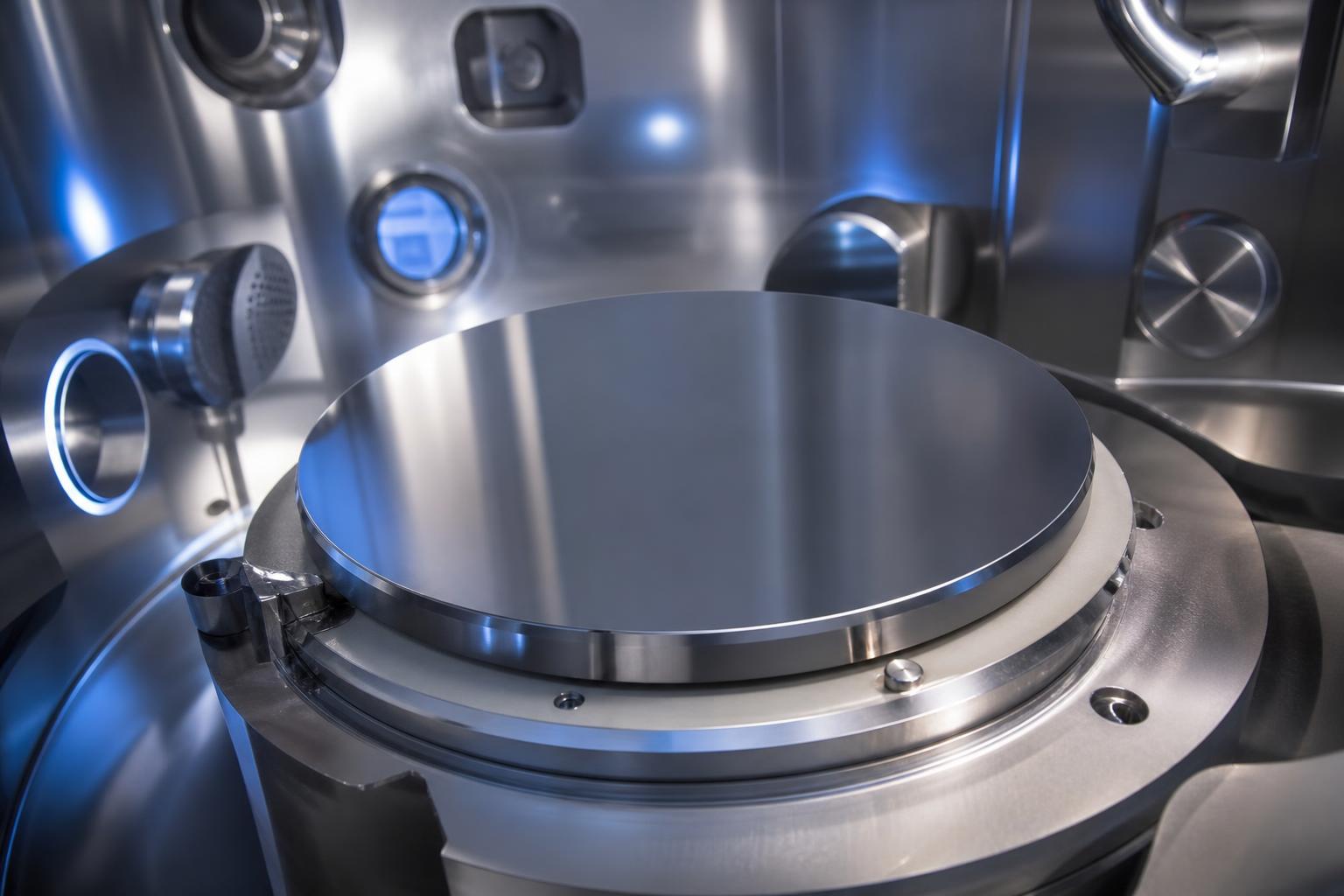
Both refractory metals appear in virtually every industrial sector with high thermal
or mechanical demands:
- Tungsten-dominant: Welding technology, X-ray technology, nuclear fusion,
radiation shielding, aerospace and defense - Molybdenum-dominant: Steel alloying (80 % of world production), glass
industry, vacuum furnace engineering, chemical processing - Both in parallel: Semiconductor manufacturing, composite materials for heat
sinks and electrical contacts, medical technology
For more on high-temperature applications:
Refractory
metals in high-temperature applications.
Tungsten or molybdenum: which material suits your application?
The material selection between tungsten and molybdenum depends on three factors: maximum operating temperature, mechanical requirements, and budget. As a rule of thumb: below approximately 3,272°F molybdenum delivers the same performance at lower cost; above that threshold, tungsten is irreplaceable.
Choose tungsten when:
- Continuous service above 3,272°F
- Maximum density for radiation shielding required
- Extreme high-temperature strength demanded
- No machining required
Choose molybdenum when:
- Temperatures up to approx. 2,912–3,272°F are sufficient
- Easy machinability is important
- Cost optimization is a priority
- Wide semi-finished product range required
Frequently asked questions about tungsten and molybdenum
What is the most important difference between tungsten and molybdenum?
Tungsten has the highest melting point of any metal at 6,188°F and is nearly twice
as dense as molybdenum (0.697 vs. 0.369 lb/in³). Molybdenum is less expensive, more
machinable, and sufficient for most high-temperature applications up to approximately
3,272°F.
Which metal has the higher melting point — tungsten or molybdenum?
Tungsten melts at 6,188°F — the highest melting point of any known metal. Molybdenum
melts at 4,748°F — also extremely high, but around 1,440°F below tungsten.
Is molybdenum cheaper than tungsten?
Yes. Depending on purity and product form, molybdenum typically costs a quarter to half
the price of tungsten. For applications where tungsten’s extreme properties are not
required, molybdenum is the more cost-effective choice.
Can molybdenum replace tungsten in practice?
For applications up to approximately 2,912–3,272°F, often yes. Tungsten becomes
irreplaceable when temperatures permanently exceed 3,272°F or when maximum density —
for example for radiation shielding — is critical.
What do tungsten and molybdenum have in common?
Both are refractory metals with extremely high melting points, low vapor pressure, and
good chemical resistance. Both are used as sputtering targets in thin-film deposition and
appear in composite materials with copper or silver for heat sinks and electrical
contacts.
Get in touch
9027 Classic Court
Orlando, FL 32819, USA